Cosmic Significance & Philosophy
Lord Shiva is revered in the Sanatana Dharma as Mahadeva—the Supreme Godhead and the boundless consciousness beyond time, space, and causality. He embodies the stillness that underlies the ceaseless rhythm of cosmic manifestation. While the mundane eye may perceive Him as the agent of dissolution (Samhara), esoteric Shaiva and Advaita philosophies recognize that this dissolution is an act of boundless grace: Shiva dissolves illusion, egoism (anava mala), and ignorance so that the individual soul (Jiva) may realize its timeless oneness with the Absolute.
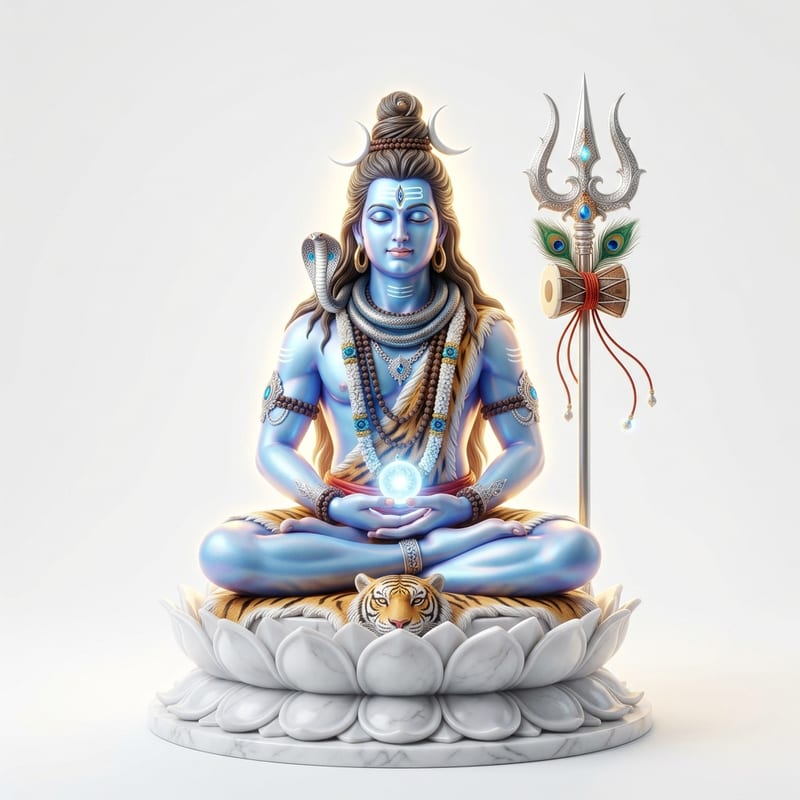
Dwelling upon the pristine snow-crested heights of Mount Kailash, Shiva exemplifies supreme ascetic detachment, meditative absorption (Samadhi), and compassion. He holds the cosmic poison (Halahala) within His throat to safeguard all created beings, thereby earning the name Nilakantha. His trident (Trishula) symbolizes mastery over the three states of consciousness (waking, dreaming, and deep sleep) as well as the three gunas (Sattva, Rajas, and Tamas). The crescent moon gracing His matted locks signifies timeless mastery over the mind and cyclical time, while the river Ganga flowing from His crown represents the ceaseless descent of purifying divine knowledge upon earthly life.
Chanting the sacred hymns dedicated to Lord Shiva—such as the Shiva Panchakshara Stotram, Bilvashtakam, and Lingashtakam—purifies the energetic channels, stills the fluctuations of the restless intellect, and instills a fearless peace that remains unshaken amid worldly storms.